Showing posts with label Books. Show all posts

Thursday, June 4, 2020

If We All Love Reading So Much, How Can We Get Back Into Reading? Pt. 2

Welcome back! Here are some of my tips for how to ease back into reading for fun again:


Do’s:

  • Reread stuff you loved when you were younger, whether that’s from childhood or high school English class. I first read To Kill A Mockingbird by Harper Lee in junior high and it blew my mind when I reread it again in 2015. I’m probably due for another reading soon.

  • Read a book that was the source material for a movie or TV show that you love. A few books are almost exactly the same, line for line (e.g., Normal People by Sally Rooney), but the vast majority range from somewhat to largely different. For Timothee Chalamet fans (you know who you are), I recommend Call Me by Your Name by Andre Aciman and Little Women by Louisa May Alcott. 

  • Read a graphic novel or comic book. You’ll fly through it in 1-2 hours and feel accomplished. I recommend all of Lucy Knisley’s graphic memoirs and the delightful college-set British comic series Giant Days by John Allison.

  • Read YA. It’s easy, fast, and fun. My favorite YA rom-com is probably When Dimple Met Rishi by Sandhya Menon, about two South Asian nerds falling in love and yes, it is as cute and fluffy as it sounds.

  • Once you’ve read a good book, read…

    • The sequel or rest of the series: No, the sequel is probably not as good as the first book but hey, it’s the same universe. 

    • Everything else that that author has written: This is a “duh” statement. I, for example, have read everything else that Sandhya Menon has written. 

Don’ts: 

  • Don’t pressure yourself to conquer War and Peace or whatever you think adults “should” be reading. Skip the “100 Books You Need to Read Before You Die” lists. 

    • However, do take up your friends’ recommendations. As I type this I realize this sounds like a thinly veiled statement to read what I’ve just listed, but in fact I write this because I finally took up Irene on her recommendation of The Idiot by Elif Batuman and of course, it was great.

  • Don’t force yourself to keep reading something you’re not loving. Move on. Yes, we all want to seem like the kind of person who reads Zadie Smith because she is so cool and smart. But ultimately no one’s going to know or care that you barely got 10% of the way into On Beauty and dropped it. (This is me exactly, but if this is also you, I recommend her novel Swing Time which is way easier to get into and her short story “Joy,” one of my favorite pieces of writing which I try to push on all of my friends at least once a year.)

Final reminder:
  • Once you’ve picked out your book and have it in hand, tell yourself “I will not check Twitter/Instagram/whatever until I have read 10 pages of this book.” Ideally, you will have stored your phone in a different room altogether but if you read ebooks on your phone like I do, you’ll have to be disciplined. Most likely, after 10 pages you will be sucked into the book and you will not remember that you have a body, much less a social networking account. 


Go forth and enjoy your read!

Wednesday, June 3, 2020

If We All Love Reading So Much, Why Aren’t We Actually Reading? Pt. 1

Photo source
My whole life, I’ve identified as a reader and a lover of books (the term “bookworm” is a bit dorky for me). Back in elementary school, I used to check out 14 books from the library every week. Every night after finishing my homework I’d sit on my purple bean bag and read until my mom inevitably yelled at me to go to bed. Still today I love bookstores, libraries, the smell and feel of new books,
bookstagrams… So why the f--- haven’t I cracked open a book in ages??!

To be fair to myself, I do read more than the average American adult. According to this random article I googled that I don’t entirely trust, the typical (median) adult in the U.S. reads 4 books per year, and my yearly Goodreads stats will prove I am beating that soundly, some years more than others. But if you were to take a deep dive into the books I’ve logged, you would see it's primarily made up of YA fiction and graphic novels for various ages. There’s nothing wrong with YA or graphic novels, and many of them are remarkably innovative and informative, but to be quite frank I am an adult whose reading level is much higher than the intended audiences of most of these books. I am not being challenged, nor am I even trying to challenge myself. 


Beyond the actual content of the books, there’s this nagging feeling that I wish I were reading more and maybe I should be reading more, but instead I’m trolling the internet, and that’s what bothers me. So here are some possible explanations I’ve come up with for why I’m not reading as much as I wish I were, and whether I actually buy these reasons:


  • We read a lot for work (maybe scientific articles for me, maybe legal documents for you) and so our brains can’t deal with any more reading comprehension

    • I don’t know what the science behind this would be… fatigue? 

  • Trouble focusing/concentrating due to stress or anxiety

    • I believe it ✓

  • Competing responsibilities such as school/work

    • I don’t entirely buy this because this doesn’t explain why I’m still watching a whole bunch of stuff and on Twitter all the time

  • We are so used to instant gratification from social media that we become reluctant to take on anything that takes a modicum of effort (i.e., why read when our fun fun phone is right there).

    • I believe it ✓

  • Competing fun stuff. We’re in the golden age of streaming 

    • True… When we were kids we had to go out and rent videos or wait for the TV to run something interesting; we couldn’t just watch *anything in the world* at a moment’s notice. 

  • We don’t actually like reading that much. Yeah, I don’t really believe it either.

  • I actually am reading a ton; I’m just not reading “serious” LIT-rah-ture so it feels like I’m not really reading. There’s a lot of pressure to read serious adult literature so if you enjoy light fun stuff like YA or graphic novels you feel shame about it, just like I shamed myself a few paragraphs ago.

    • Clearly I’m doing some mental gymnastics as far as what qualifies as what’s “worth” reading and, per usual, I need to chill. 


Stay tuned for part 2, in which I generate some use value beyond me complaining and provide some solutions for overcoming these problems!

Wednesday, September 14, 2011

The Unlikely Female Friendship

Photo Credit
There really isn’t a term that serves as the female equivalent to the “bromance,” which I discussed in my first post. Perhaps that’s because women are usually assumed to have intimate female friends, so a close bond between women isn’t worth comment. That stereotype aside, it’s strange to think about how the media thinks female friendships are established.

Based on Sex and the City, it seems as though womankind’s “obsession” with attracting and retaining men is enough to sustain friendships between unlikely pairs. Although the show is generally praised for its depiction of strong female friendships, I never quite understood why Carrie’s friends were also best friends with each other, other than their mutual interest in Carrie herself. It's hard to believe that optimistic and perky Charlotte is so close with someone as dissimilar as the cynical Miranda, forget the unapologetically unromantic Samantha.

Similarly, I can’t help but marvel at the friendship of the four girls of the Sisterhood of the Traveling Pants series. It’s odd enough to read about the opinionated rebel, the shy artist, the impulsive athlete, and the caring writer, but seeing them in the flesh on screen makes their differences even more painfully noticeable. It’s not as though radically different people can’t become friends, but as The Breakfast Club points out, it’s just not that plausible. In real life, those girls probably would’ve grown up and started hanging out with different people, whether they were soccer teammates or drawing classmates or fellow lovers of film. But then, such commonality isn’t just something to do together or someone to talk about- it’s some deeper connection based on goals, feelings, and/or values.

Call me close-minded but I’d say the media is a bit mistaken if it thinks that throwing completely differing women together in the same time and space will result in the creation of best friends forever. Appreciation? Sure. Mutual respect? Definitely. But best friends? Possible, sure, but not all that likely. That presumption undermines the complexity of women and even the pickiness which they employ to decide to whom they can speak in confidence- and with confidence. Ultimately, I tend to doubt the foundation on which TV friendship is based on, if it is simply locale or coincidence, but I would not doubt the strength of that bond if it were based on something sincere and true.

Friday, September 9, 2011

Beautiful British Voices and Disemboweling Twilight

For me, few things in the world are as enjoyable to hear as a British person's voice. Let us be honest here: with their lack of diphthongs, relaxed r's, and crisp intonation, your average Brit could recite the lyrics to "Black and Yellow" and make it sound like an e.e. cummings poem (Sorry, Saurus; I know you love him, but this is how potent their accent is).

This is probably why I am subscribed to so many British Youtubers.

Among my favorites is Alex Day, aka Nerimon. He is best friends/roommates with perhaps the most famous British Youtuber, the divinely adorable and nerdy Charlieissocoollike, and one of Alex's claims to fame is this glorious contribution to the online video sharing community:


What better way to spend 4 minutes in a video mercilessly picking apart every tragic aspect of Twilight's plot, characters, and delivery? As a former disciple of the United Church of Cullen (because I really had nothing better to do in 9th and 10th grade), I know the books front and back. I reread them each at least seven or eight times; I read about a chapter or two a day, on average, for an entire year until the fourth book came out and ruined the entire series for me. I then acquired a life, but that's a different story. As a stickler for grammar who willfully overlooked many of Stephenie Meyer's rather pitiful and awkward attempts at sentence structure ("Let's you and I not push poor Mike any further this week" reminds me of this meme), this video series was a godsend, all religious connotation intended.

Thank you, Alex Day, for helping me reclaim my soul and acquire a social life that did not include Cheetos and an abused paperback copy of a book that uses the word "dazzle" more than any Broadway score or drag queen memoir.

Hooray for wits, and hooray for Brits!

Thursday, September 8, 2011

Audiobooks in the Afternoon

Photo Credit
For the past week or so, I’ve been reading "The Hunger Games" series by Suzanne Collins, quite voraciously. (Expect more HG-related posts to come.) Well, technically, I've been listening. I didn't search for the audiobooks in particular, but when I couldn’t find print copies in any library in town (okay, I tried two!) I turned to the library system's digital media collection.

The first book, The Hunger Games, is 374 pages long but required 11 hours and 11 minutes worth of recording. It was my first audiobook ever, so the sheer amount of time that it took surprised me. Reading the actual book probably would have taken me half the time, maybe a third. (I’m a bad estimator.)

The biggest advantage to audiobooks is obviously the convenience because it allows for multitasking, so long as that other task is mindless. I spent most of my 11 hours doing data entry for work, and the audiobook actually made that time enjoyable. My only troubles occurred when I went to check my email or skim articles- often, I’d realize that I was paying no attention to the words being fed to my ears and had to rewind a bit to take it all in again. Other than that, I can’t say that listening hampered my comprehension.

Photo Credit
Still, concentration is another matter. When you’re reading a book that is particularly engrossing (as books should be), it’s easy to tune out the rest of the world. But with audiobooks, it’s unlikely that you’re going to shut off your other streams of perception and close your eyes as you listen. That defeats its inherent functionality. And as any student of psychology knows, vision tends to overpower hearing in a normal person, so it’s challenging to “get in the zone” while listening to an audiobook.

Perhaps a bigger problem is with interpretation. As a form of oral storytelling, an audiobook requires a speaker, whose narration provides his or her own spin to the story. It’s inevitable and indelible- the pace; the pitch; the gender, age, and ethnicity of the speaker- all shape the listening experience. The narrator is arguably as much an architect of the story as the author. This can be a double-edged sword: a personal reading experience becomes a shared experience, or maybe an impersonal one. This is most apparent with poetry- the words on the page may be understood differently simply by its vocalization.

So, as you might have guessed, there are definite pros and cons to listening to audiobooks, but the aural experience is drastically different to that of the visual... in fact, it’s a whole different kind of storytelling.

Wednesday, September 7, 2011

BBC, We Thank Thee for Great TV

It is a truth universally acknowledged, that a young woman in possession of a good education, must be in love with Mr. Darcy. For centuries he has embodied the literary epitome of a romantic hero – handsome, wealthy, and aloof with an underlying sense of integrity and compassion. Consider every thinking woman’s wildest fantasies effectively fulfilled. Still, something was missing: Despite his supposed perfection, Mr. Darcy could be envisioned only in our collective imagination.

Photo Credit
All this changed with the 1995 BBC television miniseries of Pride and Prejudice. Sure, there had been previous films based on the novel, but this was the first version to visualize the book for modern audiences. Though some characters appeared slightly miscast (in particular, Susannah Harker as Jane), Jennifer Ehle gave a compelling lead performance as the strong, independent Elizabeth Bennet we had come to know so well. And when Colin Firth stepped onto screen as Mr. Darcy, hearts stopped around the English-speaking world. 1995’s Pride and Prejudice ushered in a new era of literary enjoyment – the age of the BBC adaptation.

Photo Credit
Since that widely celebrated series, the BBC has produced some truly great television programming for well-read fans. Another Jane Austen series that immediately comes to mind is 2009’s Emma, starring Romola Garai and Jonny Lee Miller. That version makes excellent use of the gorgeous English landscape, presenting a classic story in crystal-clear modern high definition.

Photo Credit
Even more modernized is the 2010 series Sherlock, which actually re-imagines Sherlock Holmes and John Watson in contemporary London. As the titular character, Benedict Cumberbatch utilizes logic and cell phones to solve crimes, while Martin Freeman’s John records the stories in his online blog. It is a credit to the quality of production that Sir Arthur Conan Doyle fans have embraced Sherlock – the series remains true to original characterizations and spirit despite its updated setting.

Photo Credit
But my favorite recent BBC adaptation is 2004’s North and South, a P&P-esque romance based on the Elizabeth Gaskell novel. As a young American who read only Dickens, Austen, and Brontë in school, I had never actually heard of Gaskell until I came across North and South on YouTube. The four-part series completely blew me away; its riveting plot and melancholy north-England atmosphere strike a deep emotional cord. Daniela Denby-Ashe brings an honest likability to the heroine Margaret, and Richard Armitage channels his inner Darcy as John Thornton, the mill-owner with whom Margaret inevitably falls in love. Although North and South may be less well-known than other staples of British literature, its television adaptation has become an instant classic with BBC viewers.

BBC, thank you for bringing our favorite books to life, for surprising us with creative dedication, for introducing a new generation to the magnificence of English literature, and – most importantly – for that wet shirt scene in Pride and Prejudice. May you continue to define classy entertainment for years to come.

Monday, September 5, 2011

Confessions of a Fan Fiction Fan

Photo Credit
In honor of Labor Day, I am musing on one of my favorite methods of procrastination – Fan Fiction. Though there exists a definite stigma against Fan Fiction fans (no doubt perpetrated by a few creepy slash lovers), the rich world of fan-told stories can offer plenty of solid entertainment for avid readers. In order to toe the line between “fun” and “weird”, I personally follow 6 basic rules:

1.      Stick to canon stories.* I know, I know, it limits the possibilities, but it also keeps you from turning into a psycho when thinking about the actual literary work.
2.      Characterization is key. If a writer can’t capture the original character’s voice, then forget it and move on.
3.      Be a grammar geek. Same goes for writers who don’t bother to capitalize and punctuate their taglines.
4.      Always check the reviews. Avoid stories with fewer than 25-30 reviews unless you’re familiar with the author’s previous work. Otherwise you might end up reading some 4th grader’s version of Twilight. (Not that the quality of writing would differ much from the original…)
5.      Good authors have good favorites. Once you’ve found a good writer, you’ll find that they probably value good writing.
6.      In the end, the original author still wins. Show me someone who writes with more humor and heart than J.K. Rowling, and I’ll show you a liar.
*Missing moments are always good, as are point-of-view shifts. I would even loosely interpret “canon” to include time period shifts (e.g. modern interpretations of Jane Austen).

These rules are by no means the “right” way to approach Fan Fiction; however, the tips may work well for casual readers. As for my personal favorites, I’m a definite Harry Potter fan, so I would recommend:
  • Dumbledore’s Army and the Year of Darkness by Thanfiction. An almost 250,000 word epic on the 7th year at Hogwarts, told from the perspective of Neville Longbottom. Can be slightly cheesy, but it’s grounded in that it seems to be inspired by military experiences of war.
  • Cauterize by Lady Altair. Another war-inspired story, this time about the aftermath. Short and poignant.
  • Six Foot of Ginger Idiot by Pinky Brown. Basically Harry Potter and the Half-Blood Prince written as Ron Weasley’s diary. Absolutely hilarious because the author completely nails Ron’s voice.
  • Better than a Superhero by Realmer06. Five moments between Ron and Bill Weasley. (Yes, okay, I like Ron. A lot.)
I also like modern interpretations of Jane Austen:

Disclaimer: Yes, I am aware that we could all read actual literature instead. And yes, none of these stories can truly compare to said literature. But sometimes we just need a break from serious thought, and Fan Fiction provides a fun way to put off important work. Happy reading!

Saturday, September 3, 2011

Ron Weasley and the Loss of Innocence

Photo Credit
If you were to pit Harry Potter against Ron Weasley in a fan popularity contest, Ron would win in a heartbeat. Not that we don’t love Harry; he’s pretty cool too. But Ron’s the one we want to know in real life, the best friend whose crude jokes make us laugh just as easily as his loyalty makes us smile.

It’s jarring, then, to see Ron’s boyish charm disappear in this pivotal scene from Harry Potter and the Deathly Hallows Part 1. The moment sees Ron at his breaking point: He’s frustrated, suspicious, homesick, angry, and ready to truly abandon Harry for the first time in the entire series. When Ron walks out, you get the sense that yeah, J.K. Rowling went there. The scene rattles the series to its core, questioning the very relationship on which it was so firmly built. Because our love for Harry Potter was never about Harry’s extraordinary battle to defeat Voldemort – it was about Harry, Ron, and Hermione’s ordinary journeys from innocent children to awkward adolescents to thoughtful adults. When the Golden Trio falls apart in Deathly Hallows, we feel a distinct loss of innocence.

The risk of separating Ron from Harry and Hermione ultimately pays off, of course, with a hugely rewarding reunion scene. Though he left as an insecure boy, Ron returns as a confident man; the scene represents his redemption of faith. Not that we ever doubted him – he only had to stop doubting himself.

On screen, Rupert Grint seamlessly shifts from comic relief to raw drama and back again, demonstrating remarkable finesse and growth as an actor. But it is of course Rowling who takes credit for the wonderfully flawed characterization of Ron Weasley. From the moment we read about the red-haired boy with dirt on his nose, we knew we had made a friend for life. Ron’s journey to his “tiny ball of light” is the most rewarding element of a masterful storytelling experience.

Wednesday, August 31, 2011

Dissecting the Bromance

Photo Credit
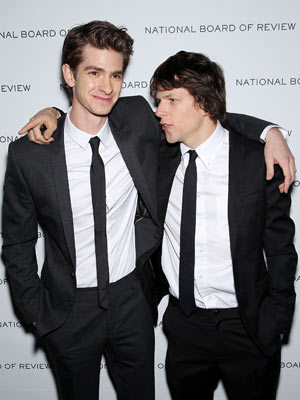
It’s present in nearly every television show or movie these days: two or more heterosexual males who demonstrate platonic love and affection for one another. Sometimes this intimate male friendship is referred to as “guy love” or even a “man crush,” but it’s more commonly known as the “bromance.”

Right off the top of my head, I could probably come up with a dozen examples. From television, we have J.D. and Turk of Scrubs; House and Wilson of House; Shawn and Gus of Psych; and the geeky quartet of Sheldon, Leonard, Raj, and Howard on The Big Bang Theory. In literature there’s Harry and Ron of the Harry Potter series, and Holmes and Watson of the Sherlock Holmes series. Perhaps the cinema displays the greatest number of bromances, from classics such as Star Trek and Lord of the Rings to modern-day Judd Apatow films. And you can’t forget real life bros of course: how about Ben Affleck and Matt Damon, who’ve known each other since childhood? Or, (and Dactyl will love this), Cameron and Damian from The Glee Project.

It’s easy to see why Hollywood loves to dwell on these male friendships.

In the ideals of classical society, men are to fulfill their traditional stereotype as stoic creatures. They are supposed to embody that “strong, silent” archetype which women supposedly desire. Thus, a man who shows warmth toward another man makes himself vulnerable to jeers of unmanliness or accusations of homosexuality, regardless of whether that is the case.

But today, a man who portrays such taciturn traits is like that pre-love-confessing Mr. Darcy- a cold and arrogant snob. Today, the media puts a different kind of straight man up on a pedestal- the single man, the family man, or even the “man-child” man- all of whom have a special, cherished connection with a special, straight, male someone. It’s not such a big deal for modern-day men to show their emotions, so it’s fine for guys to have close guy friends and express their affections toward them. There's nothing emasculating about it. In fact, I'd venture to say that it highlights a man's security in his own manliness that he can act in a traditionally effeminate, emotional manner. 

Plus, it’s kind of cute. And as we all know, Mr. Darcy was only interfering in Mr. Bingley’s love life out of genuine concern and protectiveness of his dear friend… and isn’t he all the more charming for it?